


Last Updated on February 21, 2026 by The Insurance Pros
Why Michigan Has So Many Potholes & What to Watch For
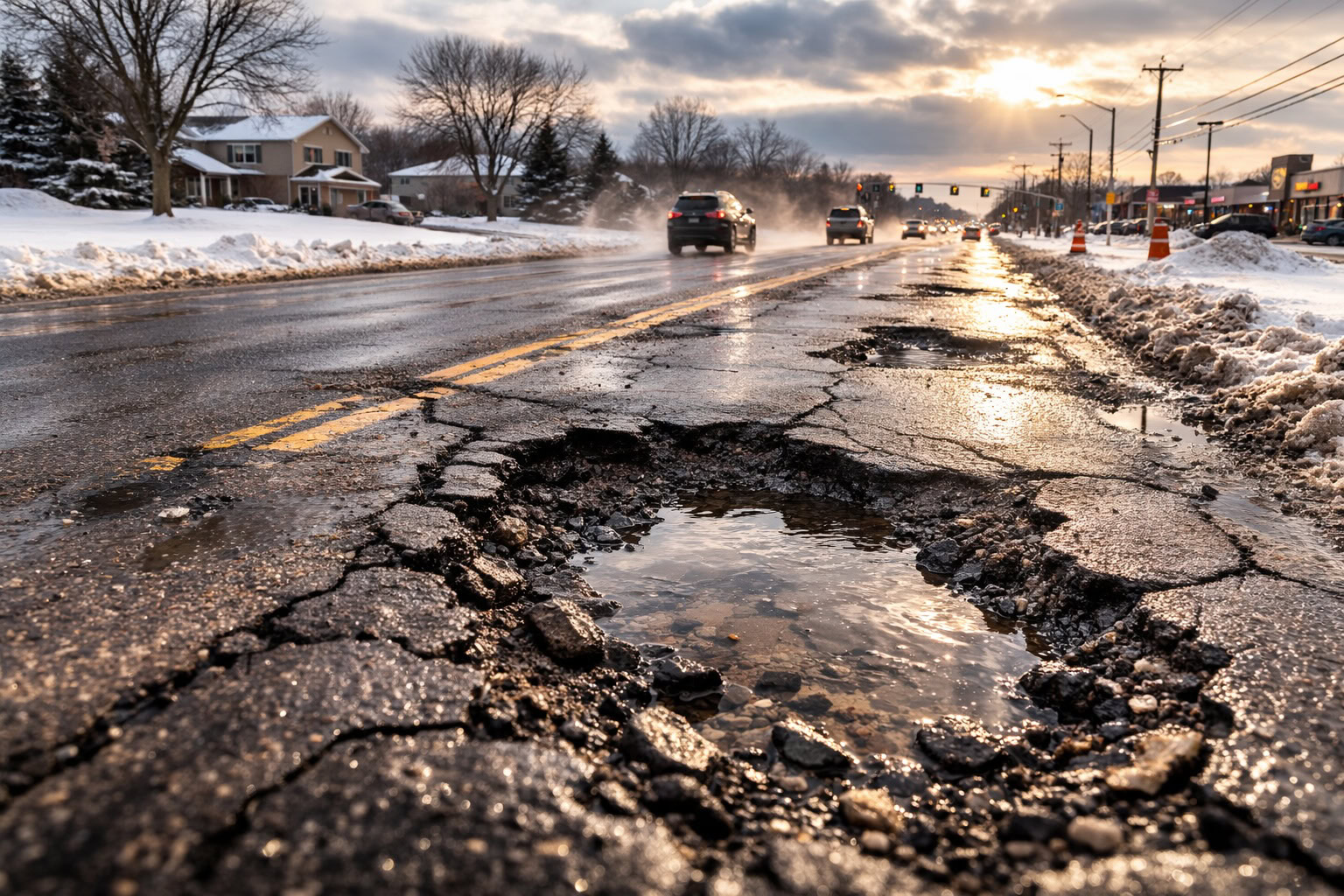
If you’ve driven in Michigan anytime between late winter and early spring, you’ve probably asked the same question as everyone else: why are the potholes so bad here? One week the roads seem manageable, then suddenly there are craters everywhere, often hidden under water and slush.
This guide keeps it simple and practical. You’ll learn why Michigan potholes show up so fast, when they’re usually at their worst, what warning signs to watch for, and how to reduce your chance of costly tire, wheel, or suspension damage.
When temperatures bounce above and below freezing and the roads stay wet, pothole risk jumps. That’s prime “watch-for-it” season in Michigan.
Why Michigan Potholes Happen So Often
Michigan gets hit hard because our winter weather changes constantly. Instead of staying frozen for long stretches, many areas see frequent temperature swings. Water works its way into small cracks in the road, then freezes, then thaws, and repeats. Over time, those weak spots break apart under traffic, especially on busy commuter routes.
That’s why you can drive the same road all winter and feel like it “suddenly” falls apart. The damage builds quietly, then shows up fast once the surface weakens.
When Is Pothole Season in Michigan?
Most drivers notice the worst pothole conditions during:
- Late February (thawing starts, roads stay wet)
- March (repeat freeze-thaw cycles accelerate breakdown)
- Early April (potholes expand and multiply before permanent repairs ramp up)
A simple rule: if the roads look wet, the shoulders are slushy, and nights still dip toward freezing, you’re in peak pothole season.
Why Some Roads Get Hit Harder Than Others
Not every road falls apart the same way. You’re more likely to see big potholes on:
- Main roads and commuter corridors with heavy daily traffic
- Routes with truck traffic (more weight, more wear)
- Older pavement that already has cracks and patches
- Areas with poor drainage where water sits on the surface
If you notice recurring potholes in the same stretch each year, it usually comes down to traffic volume and water drainage. Water is the common thread.
What Drivers Should Watch For
Most pothole damage happens because drivers don’t see the hazard early enough. Here are the top warning signs:
- Standing water: puddles can hide deep potholes and sharp edges
- Dark dips in wet pavement: they often signal a depression
- Clusters of cracks: cracked “webbing” can mean the surface is failing underneath
- Sudden thumps or vibration: impacts can cause damage even without an immediate flat
Keep a little extra following distance in late winter. If you’re tailgating, you can’t see potholes until it’s too late.
How to Reduce Your Risk of Pothole Damage
You can’t control the roads, but you can control your odds. These habits help reduce damage risk:
- Slow down on wet, slushy, or poorly lit roads
- Avoid sudden swerves (it can cause a loss-of-control crash)
- Check tire pressure regularly in winter (pressure drops when temps drop)
- Watch for puddles and treat them as “unknown depth.”
- Stay alert on familiar routes where potholes tend to reappear
Low-profile tires (common on sport trims) are more vulnerable because there’s less sidewall between the wheel and the road. If your vehicle runs low-profile tires, be extra cautious in thaw season.
For more practical pothole reporting and safety guidance, MDOT also maintains a pothole resource page here:
MDOT: Report a pothole on state roads.
Signs You May Have Pothole Damage
Sometimes pothole damage is obvious (flat tire). Other times it shows up days later. Watch for:
- Steering pulling to one side
- Vibration at highway speeds
- New “shimmy” in the wheel after the impact
- Uneven tire wear
- Visible rim dents or tire bubbles
If you notice these after a hard hit, get your alignment and suspension checked. Catching it early can prevent additional wear.
Already Hit a Pothole? Here’s What To Do Next
If your vehicle is already damaged and you’re deciding whether to report it or file a claim, use this step-by-step guide:
Michigan Pothole Damage Claims: Reporting and What to Expect.
Helpful related reads:
Michigan Collision Insurance Options and Black Ice & Winter Driving Safety in Michigan.
❓ Michigan Pothole FAQs
Why are potholes worse in Michigan than other states?
Michigan often gets repeated temperature swings above and below freezing. That pattern keeps roads wet and vulnerable, which speeds up pothole formation compared to areas with a steady deep freeze.
When should I be most on alert for potholes?
Late February through early April is typically the roughest stretch. If roads are wet and nights are still freezing, potholes can appear and grow quickly.
Can a pothole mess up my alignment even without a flat tire?
Yes. A hard impact can knock alignment out, bend a rim, or damage suspension components even if the tire looks fine at first. If you feel pulling or vibration afterward, get it checked.
What’s the safest way to avoid a pothole?
Increase following distance so you can spot hazards early. Avoid sudden swerves, especially in traffic or slick conditions. Slowing down and staying predictable is usually safer than last-second maneuvers.
Final Thoughts
Michigan potholes aren’t random bad luck. They’re a seasonal pattern. When the thaw starts and the roads stay wet, that’s your cue to slow down, leave extra space, and watch for standing water and cracked surfaces.
A little awareness during pothole season can save you from frustrating repairs and unexpected downtime.
