


Last Updated on February 6, 2026 by Insurance Pros
Michigan PIP Coverage: How to Choose the Right Option and Save
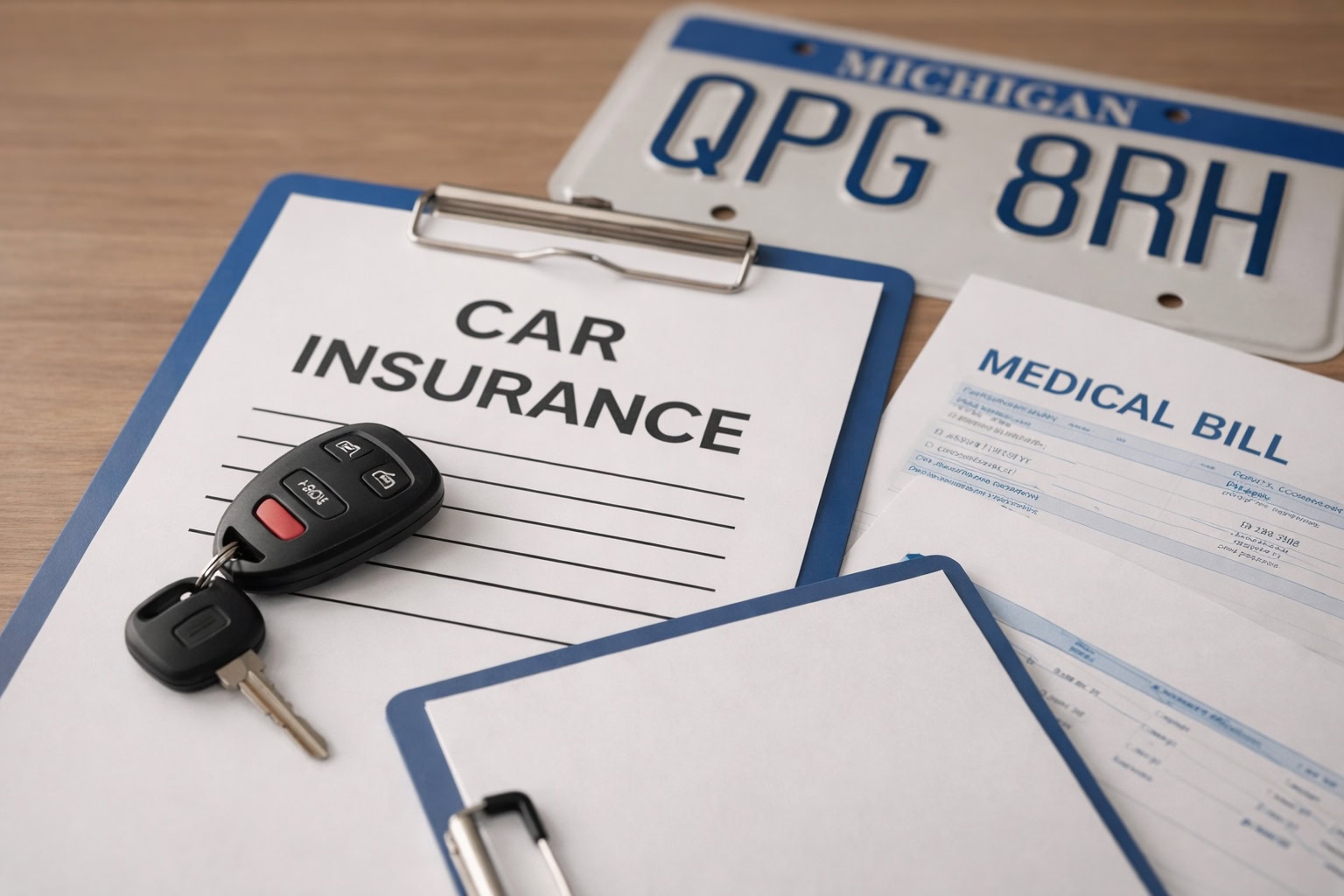
Michigan’s no-fault reform gave drivers more control over Personal Injury Protection (PIP) medical coverage. That flexibility can lower your premium, but it can also change who pays for medical bills after a serious crash. Use this guide to compare the options, understand the tradeoffs, and choose a PIP level that fits your health coverage and budget.
PIP choices usually create savings by lowering the PIP medical portion of your premium, but lower limits can increase your out-of-pocket risk after a serious injury.
How to Choose the Right Michigan PIP Option
Start with these three questions, then match yourself to the option list below:
- Does your health insurance cover auto accident injuries? Some plans do, some do not, and rules vary by plan type.
- Who lives in your household? PIP exclusions and opt-out rules can depend on household coverage, not just the named insured.
- Could you absorb a large medical bill if something goes wrong? Lower PIP limits can protect the premium, but they can shift risk to you.
Michigan’s 6 PIP Medical Coverage Choices
- Unlimited PIP: No lifetime cap on allowable medical expenses under PIP.
- $500,000 Limit: Higher protection with potential savings versus unlimited.
- $250,000 Limit: A common choice for drivers balancing cost and protection.
- $250,000 with PIP Medical Exclusions: Available when you and/or household members have qualified health coverage that covers auto accident injuries.
- $50,000 Limit: Only available for eligible Medicaid enrollees (very specific requirements).
- PIP Medical Opt-Out: Only available if the named insured has Medicare Parts A & B and the household meets the eligibility requirements.
Who Each Option Is Usually Best For
There’s no one-size-fits-all answer, but most Michigan drivers fall into patterns like these:
- Unlimited PIP: Drivers who want the highest protection, households without strong health coverage for auto injuries, and families who prefer less uncertainty.
- $500,000 PIP: Drivers who want meaningful protection but still want to reduce their premiums compared with unlimited.
- $250,000 PIP: Drivers with solid employer coverage and a budget-first approach, who still want a cushion beyond minimal options.
- $250,000 with exclusions: Drivers who clearly qualify and want savings but understand exclusions can shift medical handling to health insurance.
- $50,000 Medicaid: A narrow option for those who qualify, with higher risk if eligibility changes.
- Opt-out (Medicare A & B): Medicare households that qualify and want to remove the PIP medical premium while understanding the tradeoffs.
What PIP Covers in Michigan (Beyond Medical Bills)
- Allowable medical and rehabilitation expenses (up to your selected PIP medical level)
- Work loss: 85% of lost wages, subject to a monthly maximum (for up to 3 years)
- Replacement services: Up to $20/day for household help (for up to 3 years)
- Survivor’s loss benefits may apply in fatal accidents, subject to limits
What happens if your PIP medical benefits are exhausted or if you choose to opt out?
If you choose a lower PIP medical limit and medical costs exceed it, or you opt out and later have uncovered expenses, you may need to rely on other paths, such as
- Health insurance (if the plan covers auto accident injuries and providers accept it)
- Personal savings or payment plans
- If legally available, potential claims against the at-fault driver may be made.
- Your policy may provide additional coverage, depending on the specific policy and circumstances.
MCCA Threshold (Why “Unlimited” Works Differently)
For drivers with unlimited PIP, the Michigan Catastrophic Claims Association (MCCA) reimburses insurers for PIP medical costs above a set “retention” amount. For policies issued or renewed from July 1, 2025, through June 30, 2027, the retention is $675,000.
Finally, additional information regarding the Michigan Catastrophic Claims Association can be found here:
MCCA New Fee.
FAQ: Michigan PIP Coverage Questions
Can I change my PIP level later?
In most cases, you can choose a different PIP medical option at renewal, and sometimes mid-term, depending on the carrier’s rules. Always confirm eligibility before switching into exclusions or opting out.
Does my health insurance automatically replace PIP?
Not always. Some health plans cover auto accident injuries, others exclude them, and provider billing practices vary. Verify coverage in writing before relying on health insurance in place of PIP medical.
Is unlimited PIP still worth it?
It can be, especially for households that want the strongest protection and less uncertainty around catastrophic injuries. The best choice depends on your health insurance, household coverage, and risk tolerance.
Who can opt out of PIP medical?
Opt-out is limited. Generally, the named insured must have Medicare Parts A and B, and the household must meet the eligibility requirements. Carefully review the rules before selecting this option.
For the official state overview of PIP medical choices, visit the
Michigan Department of Insurance and Financial Services (DIFS).
