


Last Updated on January 21, 2026 by The Insurance Pros
Michigan Fire Extinguisher Guide for Homes and Rentals
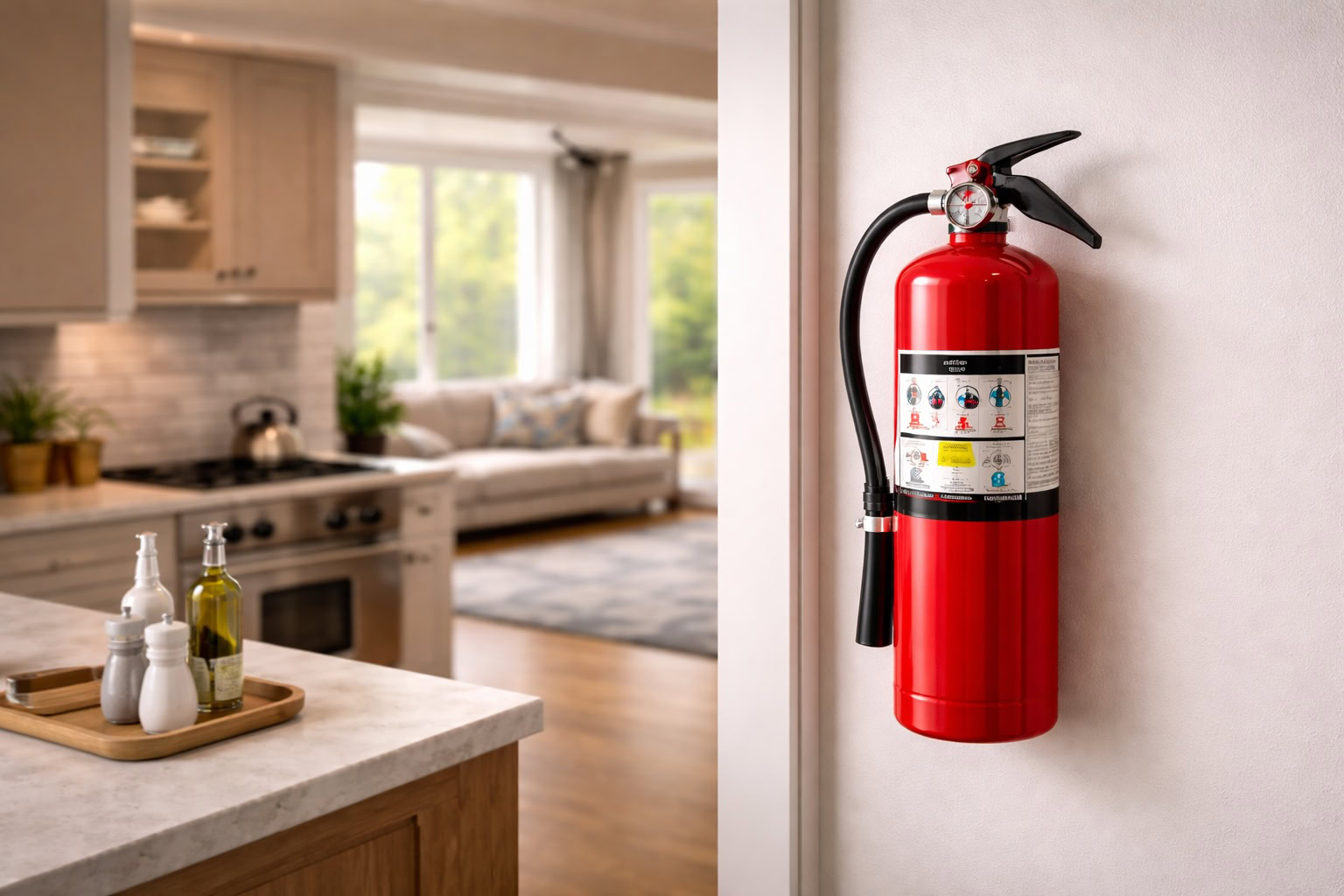
Fire extinguishers help stop small fires before they spread, but only if you choose the right type, place it in a smart location, and keep it maintained.
This Michigan-focused guide covers what homeowners and renters should keep on hand, plus practical placement tips for kitchens, garages, basements, and rentals.
Quick pick for most Michigan homes: a 5 lb. ABC extinguisher near the kitchen exit, plus a second unit near the garage or basement. If you cook often, consider a Class K option for grease-related fires or add a fire blanket for quick containment.
🏠 Get a Free Michigan Home Insurance Quote
Do Michigan Homes and Rentals Need Fire Extinguishers?
Many Michigan homeowners choose to keep at least one extinguisher on each level of the home. For rentals, requirements and expectations can vary by building type.
local inspections, and lease terms. Even when an extinguisher is not specifically required for every single-family home, having one is a smart and low-cost safety step.
If you rent, check your lease and ask your landlord where any building-provided extinguishers are located. If you cook often, keeping a small kitchen-rated option in your unit can add peace of mind.
Where to Put Fire Extinguishers in a Typical Michigan Home
Placement matters as much as the extinguisher itself. You want quick access, but you also want to be able to escape if the fire grows.
Place extinguishers near exits and along escape routes so you can keep your back to the door while using them.
- Kitchen: Near the exit, not directly over the stove
- Garage: Near the door to the house (garages often store fuel, tools, and chemicals).
- Basement: Near the stairs and close to the furnace/water heater area
- Bedrooms level: In a hallway outside sleeping areas (especially in larger homes)
Michigan seasonal note: Winter heating, space heaters, fireplaces, and power outages can increase fire risk. Make sure your primary extinguisher is easy to reach even when coats, boots, and bags pile up near entryways.
🔥 Fire Extinguisher Classes (A–B–C–D–K)
Fire extinguishers are rated by the types of fires they can handle. The most common home unit is ABC, which covers everyday household risks.
Kitchens may benefit from a Class K extinguisher if you regularly cook with oils.
- Class A: common combustibles like wood, paper, cloth
- Class B: flammable liquids and gases like gasoline, oil, solvents
- Class C: live electrical equipment like appliances, tools, wiring
- Class D: combustible metals (rare in most homes, more common in workshops)
- Class K: cooking oils and fats (grease fires)
For most Michigan homes and rentals, a quality ABC extinguisher covers the biggest everyday risks. If you cook frequently or deep-fry, add a Class K option or keep a fire blanket accessible.
📦 Recommended Sizes for Homes and Rentals
Size affects discharge time and effectiveness. If an extinguisher is too small, it may run out before the fire is controlled.
If it’s too large, it may be difficult to handle in a stressful moment.
- 5 lb. ABC: Best all-around choice for most homes and apartments
- 10 lb. ABC: Strong option for garages, workshops, and larger homes
- Class K: Good fit for kitchens, especially where grease fires are a concern
Keep the extinguisher close enough to grab quickly, but far enough away that you can still exit safely if flames spread.
🛠️ Maintenance: Quick Monthly Check
A fire extinguisher that isn’t maintained is basically decor. Do a quick check once a month, and replace or service units when needed.
- Confirm the pressure gauge is in the green
- Check that the pin and tamper seal are intact
- Inspect for rust and dents and leaks, and make sure the nozzle is clear
- For rechargeable models, schedule professional service based on the manufacturer label
Replace disposable units after any use or when expired. Rechargeable extinguishers should be serviced after any discharge, even a short one.
👩🍳 Kitchen and Grease Fire Safety
Never use water on a grease fire. Turn off heat if it’s safe, cover the flames with a lid if possible, and use the correct extinguisher for the situation.
For prevention tips, see:
🧯 How to Use a Fire Extinguisher: Remember P.A.S.S.
- Pull the pin
- Aim at the base of the fire
- Squeeze the handle
- Sweep side to side at the base
🚫 When Not to Use an Extinguisher
Fire extinguishers are for small, early-stage fires. If conditions are unsafe, get out and call 911.
- If the fire is spreading rapidly or producing heavy smoke, evacuate and call 911
- If you don’t know the fuel type or you don’t have the correct extinguisher
- If the fire blocks your exit path
- If you are unsure, prioritize getting everyone outside safely
🛍️ Recommended Home Extinguishers
If you want a simple starting point, choose a reputable ABC extinguisher in the 5–10 lb range and add a kitchen-specific option if needed.
As an Amazon Associate, we may earn from qualifying purchases.
📥 Download: Fire Extinguisher Classes (Printable)
 Keep a quick-reference chart handy for your home or rental. Download the printable PDF:
📄 Download Fire Extinguisher Classes (PDF)
❓ FAQs: Michigan Fire Extinguishers for Homes and Rentals
Should renters in Michigan buy their own extinguisher?
Many renters choose to keep a small ABC extinguisher in the unit, especially near the kitchen exit. Even if a building provides shared extinguishers, having one in your living space can save time.
Always follow your lease rules, and do not remove building-provided equipment from common areas.
What’s the best fire extinguisher type for a Michigan home?
For most households, an ABC extinguisher is the best all-around choice. If you cook frequently with oils, consider adding a Class K option or a fire blanket for fast containment.
Where should a fire extinguisher be mounted?
Place it near an exit and along an escape path, not deep in the area where a fire is most likely to start. In Michigan homes, common locations include the kitchen exit, the garage entry door, and the basement stair area.
How often should I replace my fire extinguisher?
Follow the manufacturer label for replacement and servicing. Replace disposable units after any use or when expired. Rechargeable units should be serviced after any discharge and inspected regularly.
📣 Take Action Now
Fire safety upgrades are one of the simplest ways to protect your home or rental. If you’d like a quick coverage review,
We can help you compare homeowners’ or renters’ insurance options in Michigan.
🏠 Get a Free Michigan Home Insurance Quote
Also see our guides on smoke detector requirements and preventing electrical surges.

It’s good to know that Class C models are used for electrical fires. I have been thinking about getting a fire extinguisher for my utility room. Since there is mostly electrical equipment in there, Class C may be the best option for this.